

You Can't Cut What You Can't See
An $11 billion medical device company had 4,000 applications. Five different ERPs. Two SAP instances. The result of 20 years of acquisitions where systems were never integrated.
The board gave leadership a mandate: enterprise simplification. Move from 4,000 apps to a streamlined stack. Target: double-digit millions in cost reduction.
The operations team was on the hook to deliver. But they had a problem.
They couldn't answer a basic question: "How does an invoice actually get processed here?"
Not theoretically. Not according to documentation. Actually.
They spent 12 weeks just counting their applications. And still had no visibility into which ones were actually being used effectively versus which ones were wasting money.
The company processed a million invoices per year through their source-to-pay process. Most invoices were failing OCR. Suppliers weren't getting paid. Finance was drowning in complaints and firefighting.
The problem wasn't lack of systems. They had plenty of those. The problem was they couldn't see which systems actually supported the work and which were expensive shelfware.
Leadership knew they needed to rationalize their application portfolio. The CFO, CIO, Head of Global Business Services, and CPO were all reporting to the board on the simplification program. But they couldn't cut what they couldn't see being used efficiently.
Traditional approaches wouldn't work. Hiring consultants meant 18 months of process mapping, millions in fees, massive data teams, complex integrations with process mining tools. By the time they'd have answers, the business would have changed.
They needed to map how source-to-pay actually worked, not how it should work on paper. They needed to identify which applications were driving impact versus wasting money. They needed to find best practices across regions and teams. And they needed to build a concrete business case with real data for the CFO and board.
Fast. Not a two-year consulting project.
Six Weeks to Visibility
Fluency deployed to the finance team in one hour. No integrations needed. It worked across all their systems automatically.
Two weeks later, they had complete visibility into source-to-pay.
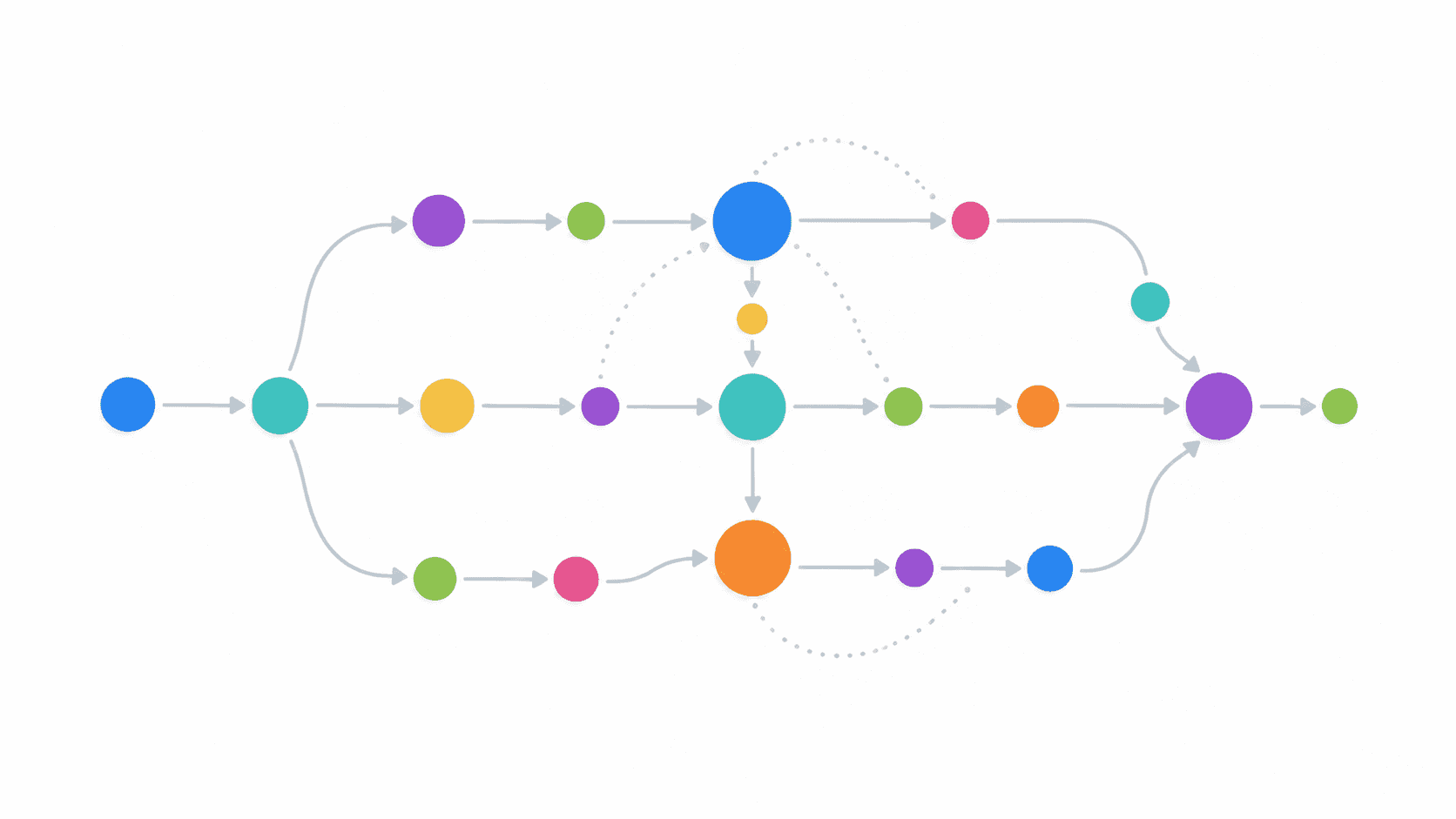
Fluency automatically discovered all the variants of how invoices were being processed. It mapped each path with metrics: cycle time, success rate, rework loops. The finance team continued working exactly as they always had. Fluency captured the operational reality.
The discovery: Finance had invented 47 different ways to process invoices.
Three of those paths were fast and efficient. The rest were slow and inefficient. High performers in certain regions had figured out workflows that worked. Those practices stayed invisible to everyone else.
But the bigger insight wasn't just about invoice workflows. It was about application usage.
Fluency showed them which of their 4,000 applications actually supported the source-to-pay process and which didn't. Not based on what systems were deployed or what licenses they'd purchased. Based on what people actually used to get work done.
15 applications were used by fewer than 5% of the finance team. Millions in licensing costs for tools that contributed almost nothing to actual work execution.
The Business Case That Actually Worked
The operations team now had what they needed: a data-backed business case for transformation.
Not theoretical process maps. Not consultant recommendations. Real productivity data showing the delta between efficient and inefficient workflows, measured from a user-centric perspective.
They could show the CFO and board exactly where the $10M+ in application cost savings would come from. Which systems to decommission. Which workflows to standardize. Which regional best practices to replicate company-wide.
The standardization was straightforward. Take the three efficient paths, make them the standard, eliminate the 44 wasteful variants. Decommission the 15 applications that weren't actually supporting the work.
But more importantly, they now had all the process data mapped and ready for the next phase: automation with AI agents and RPA. You can't automate workflows you haven't defined. And you can't define workflows you can't see.
What Changed After Six Weeks
The six-week pilot proved ROI immediately.
Finance could see work happening in real time. Not quarterly retrospectives. Not annual audits. Real-time visibility into how invoices moved through the organization.
Leadership was making decisions with data, not guesses. Which systems to keep. Which to cut. Which workflows to automate first. All evidence-based.
The company is now expanding the approach. From source-to-pay to prospect-to-cash. From finance to operations. The pattern repeats: significant workflow variance, hidden best practices, clear opportunities for standardization and application rationalization.
Traditional approach: 18 months, consultants, process mining implementations, millions in spend, massive data teams, complex system integrations.
Fluency approach: 6-week pilot, guaranteed insight, immediate ROI.
Why Most Simplification Programs Fail
Most enterprises approach simplification backwards.
They start with the application portfolio. "We have too many apps. Let's consolidate." They create application rationalization committees. They hire consultants to map dependencies. They spend months in analysis paralysis.
But they can't answer the fundamental question: which applications actually support the work versus which are organizational debt?
Usage data doesn't tell you this. Just because someone logs into a system doesn't mean it's valuable. They might be logging in because the efficient workflow is buried in another system they don't know about. They might be using it for one minor task that could be handled elsewhere. They might be using it because it's required by policy, not because it adds value.
What you need is work data. How do tasks actually flow through the organization? Which systems are on the critical path? Which applications support high-performing workflows versus low-performing ones?
Without this visibility, simplification is guessing. You'll cut systems that matter and keep systems that don't. You'll standardize inefficient processes because you can't see the efficient alternatives. You'll spend millions on transformation while the real opportunities stay invisible.
The Application Rationalization Trap
Here's what happens in most enterprise simplification programs:
Leadership mandates application rationalization. IT creates a list of all systems. Finance analyzes licensing costs. Consultants interview stakeholders about what they use and why.
Then everyone argues. Marketing says they need their specific CRM. Sales says theirs is different. Every region defends their systems. Every department has "unique requirements."
The simplification program stalls. Or worse, it forces consolidation based on politics rather than performance. The loudest voices win. The actual data about what works never enters the conversation because it doesn't exist.
This manufacturer avoided that trap.
They didn't ask people what systems they needed. They measured which systems actually supported effective work. The data settled the arguments. Keep the applications that enable the three efficient invoice workflows. Cut the ones that only support the 44 inefficient variants.
No politics. No opinions. Just operational reality.
What This Means for Automation and AI
The company's ultimate goal wasn't just cost reduction. It was building the foundation for automation and AI.
But you can't automate workflows you haven't defined. And most enterprises haven't actually defined their workflows. They have documentation that doesn't match reality. They have process maps that describe the theory, not the practice.
Fluency gave them the real workflow definitions. Not what should happen according to the documentation. What actually happens, measured across thousands of executions, with all the variants and exceptions and workarounds captured.
Now when they deploy AI agents or RPA, they're automating proven workflows, not theoretical ones. They're automating the three efficient paths, not randomly picking from 47 variants and hoping it works.
This is why most automation projects fail. Companies automate before they have visibility. They build AI on top of undefined processes. They wonder why adoption is low and ROI doesn't materialize.
The sequence matters: visibility first, standardization second, automation third.
Without visibility, automation and AI remain a long-fetched afterthought, not surgically precise improvements to proven workflows.
The Six-Week Model for Enterprise Transformation
Six weeks from deployment to business case. That's the new model.
Not 18 months of consulting. Not millions in process mining implementations. Not massive data teams building integrations.
Deploy Fluency in an hour. Get complete workflow visibility in two weeks. Build the business case by week six.
Then expand. Source-to-pay this quarter. Prospect-to-cash next quarter. Operations after that. Each time: discover variants, identify best practices, standardize, rationalize applications, prepare for automation.
The traditional consulting model can't compete with this timeline or this ROI. Which is why enterprises that discover this approach don't go back.
They've seen what's possible when you can actually see how work happens. When you can measure workflow performance in real-time. When you can make decisions based on operational data rather than stakeholder opinions.
The board wanted simplification. Leadership wanted cost reduction. Operations wanted clarity about what to automate.
Fluency delivered all three. In six weeks.
Because you can't simplify what you can't see. And for the first time, this manufacturer could actually see how work happened across their 4,000 applications.
The question wasn't "should we simplify?" anymore. It was "how fast can we replicate this across the rest of the business?"
Ready to see which of your applications actually matter?
Fluency delivers workflow visibility in weeks, not quarters. No integrations, no consultants, no guesswork.
See how leading enterprises rationalize applications with data.